FAQ
Frequently Asked Questions
Why study US-75?
What are the objectives of this study?
What are the study limits?
Why is the open house being held at this time?
What is the timeline of the project?
What is an X-ramp?
Will noise walls be included in the project?
How will I know if ODOT plans to acquire my property?
What other projects are planned in the area?
How does ODOT calculate the existing and future traffic volumes?
Where can I get more information?
Why study US-75?
Traffic and access problems along US‑75 are serious and can’t be ignored. The Oklahoma Department of Transportation (ODOT) wants to look at short‑term and long‑term road improvements to make travel safer and easier. The goal is to improve traffic flow, safety, and connections for people who drive on or cross this important roadway.
What are the objectives of this study?
The goals of this study are to plan for future growth in the area, make it easier for people to get on and off the road and travel between nearby roads, and reduce the number of crashes in the study area.
What are the study limits?
The study area runs from the Okmulgee County line (just north of 211th Street) to 151st Street, south of Glenpool in Tulsa County, Oklahoma. The interchange at 151st Street is not included because it is being studied in a separate project.
Why is the open house being held at this time?
The study team wants to share updates on the project, explain what’s coming next, and hear your thoughts on early design ideas. Your feedback is important to help decide what options will work best for the public.
What is the timeline of the project?
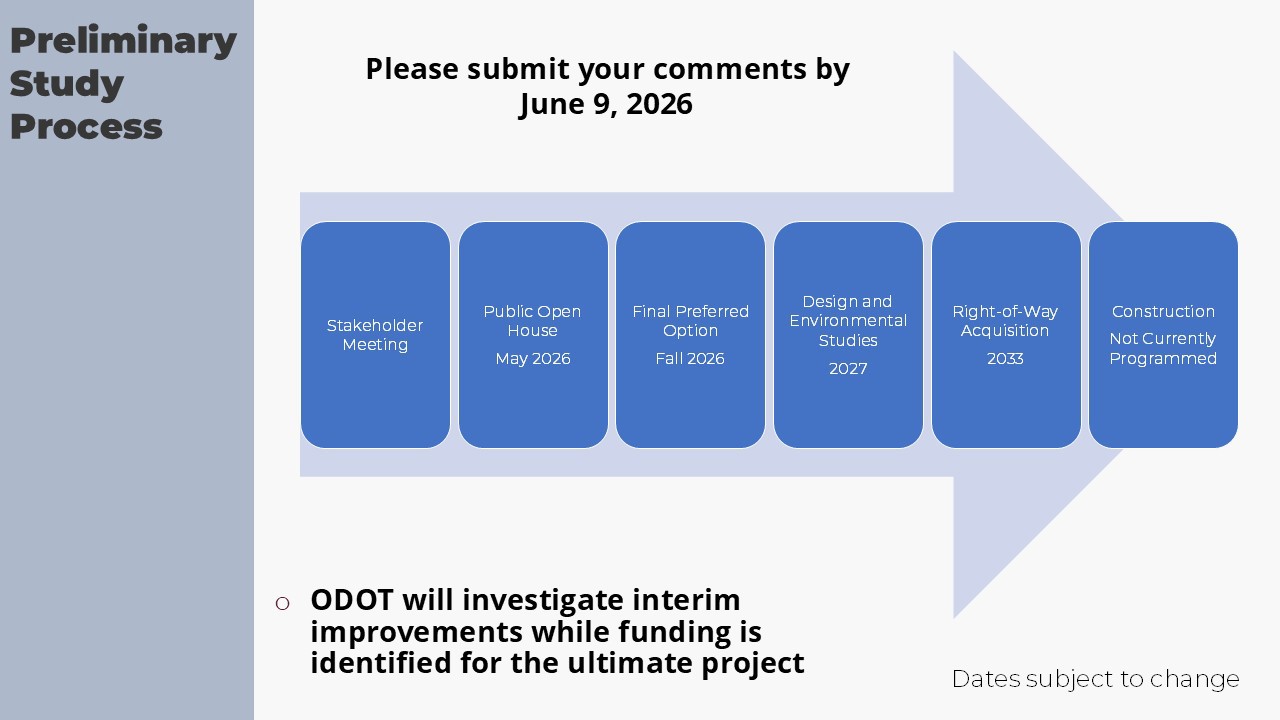
The project timeline is shown below. After the public open house, ODOT will review all public feedback and choose a preferred option. That option will then be studied and designed in more detail.
ODOT currently plans to start buying right‑of‑way in 2033. Construction is not funded yet, but ODOT is looking at ways to address more immediate needs in the meantime.
What is an X-ramp?
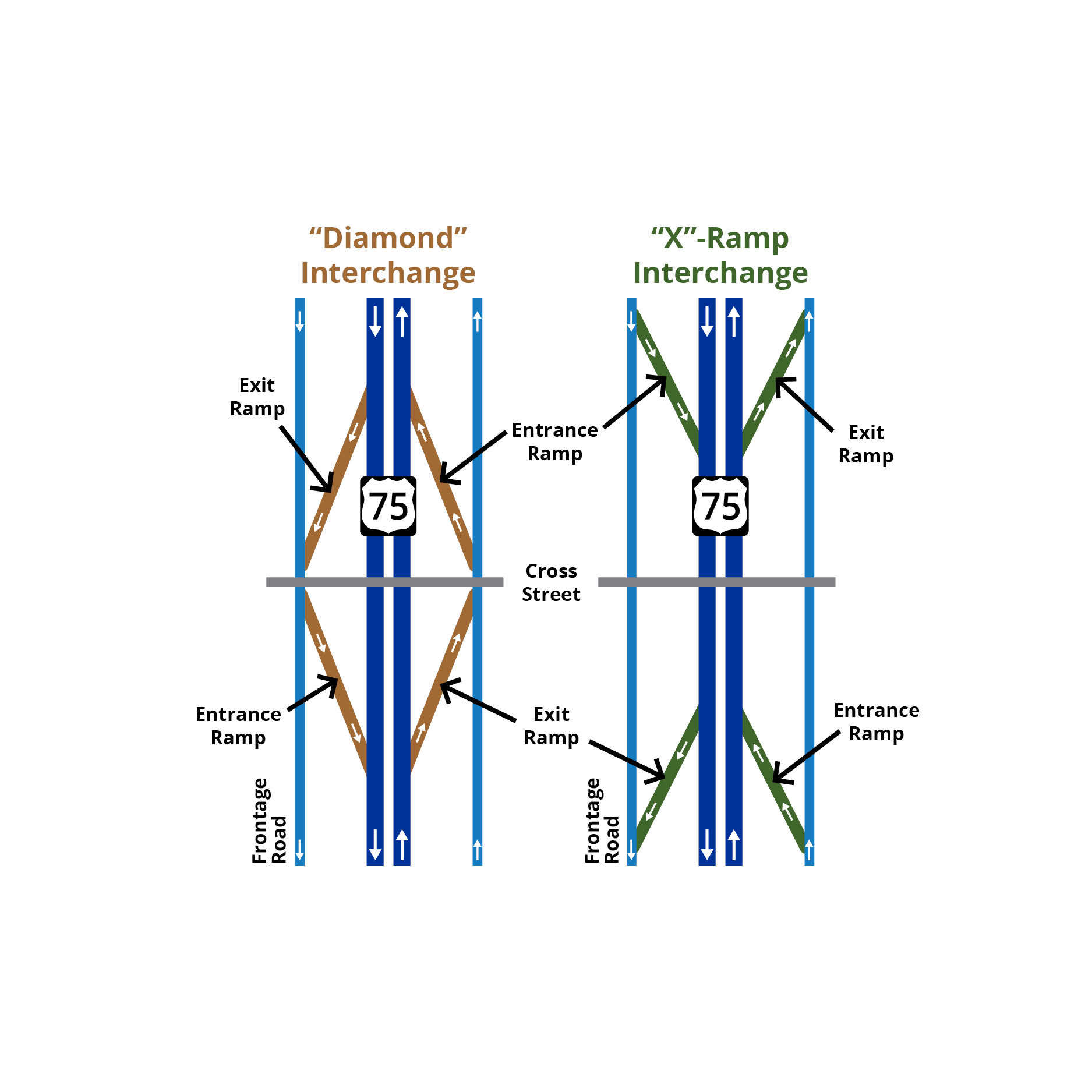
An X‑ramp is a type of highway ramp where the entrance and exit ramps are switched compared to a normal design. From above, the ramps look like an “X.”
X‑ramps are usually used with one‑way frontage roads. With this design, drivers get on the highway before they cross the main road and get off the highway after they cross it.
Will noise walls be included in the project?
A noise study will be done later in the project. The study will follow federal and state rules. If the study shows that noise walls are needed and meet those rules, they will be included in the project.
How will I know if ODOT plans to acquire my property?
The maps showing where ODOT may need land are early drafts and could change as the design moves forward. ODOT will try to reduce property impacts as much as possible. If your property is affected, ODOT will contact you in the future. Land purchases could begin in 2033, depending on funding.
What other projects are planned in the area?
ODOT’s 8-Year Construction Work Plan lists all planned road projects. You can see a map of these projects on 8 Year Construction Work Plan 🔗 website.
The 🔗 symbol means the text serves as a hyperlink.
How does ODOT calculate the existing and future traffic volumes?
ODOT counts how many vehicles use state highways every two years. These counts show how much traffic is on the road right now. Future traffic numbers are estimates based on growth over time.ODOT uses a measure called Annual Average Daily Traffic (AADT). This means the total number of vehicles that use a road in one year divided by 365 days. Some days have more traffic than others, but AADT shows the average and helps explain how busy a road is overall.
Where can I get more information?
You can get more information by contacting ODOT’s Government & Community Affairs team. Email engage@odot.org or call 405‑325‑3269 and leave a message.